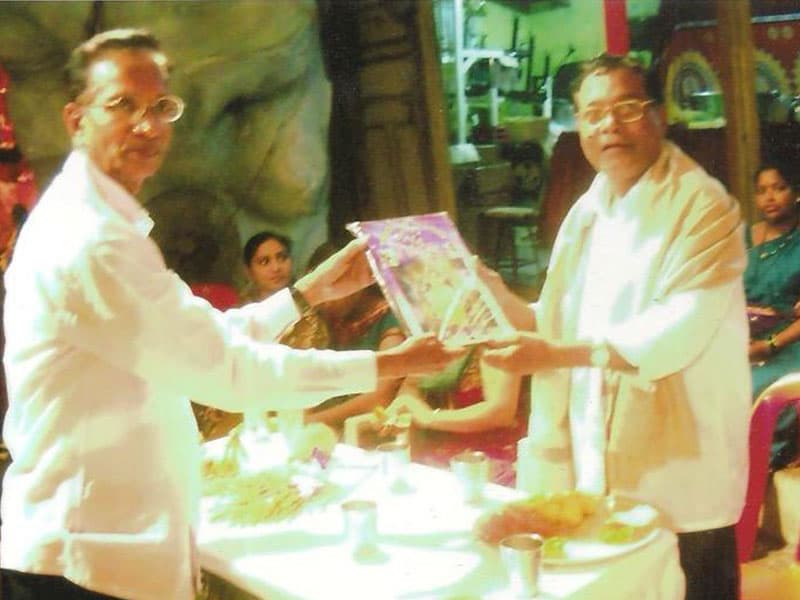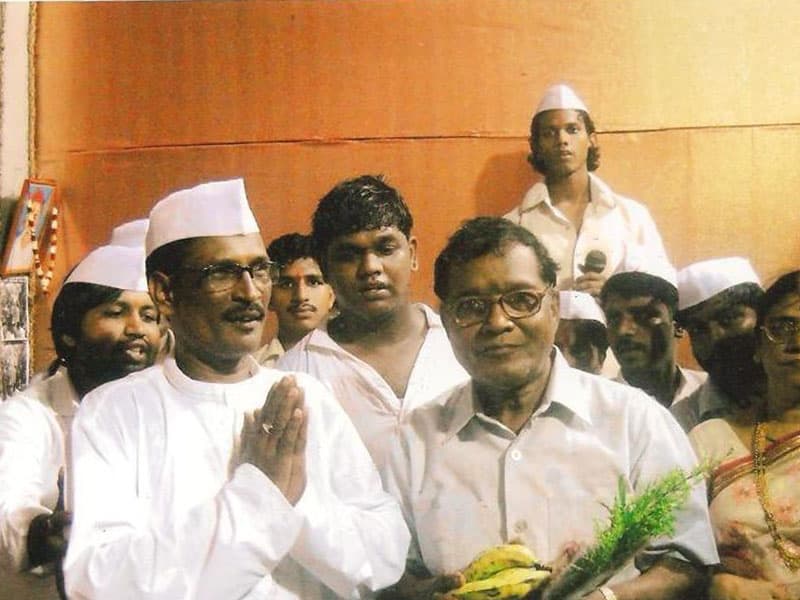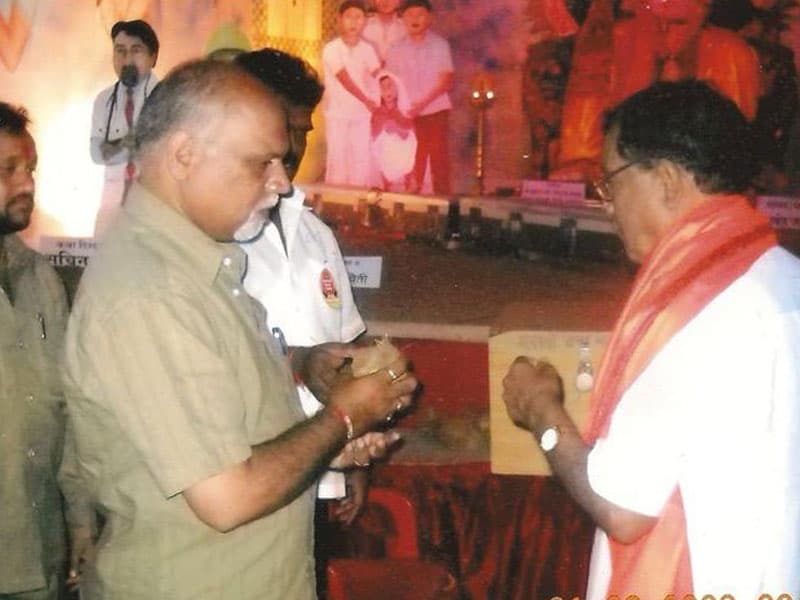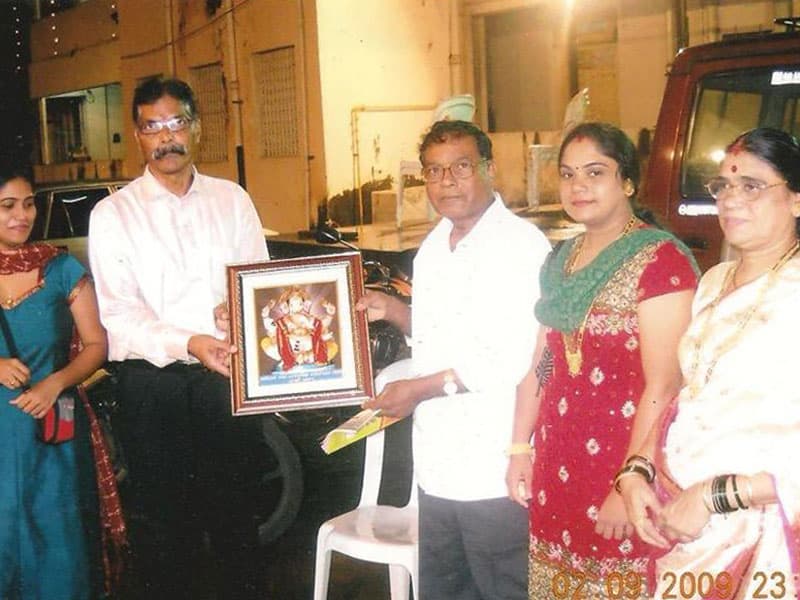
Sculptor Babi Bandekar
The inspiring journey of hands that gave form to clay, of an artist who gave form to faith, and of a legacy the five daughters keep unbroken
The renowned sculptor known far and wide as Babi Bandekar — his full name is Vishnu Bhagwan Bandekar.
Our Konkan — a land at the edge of natural beauty, rich in cultural and historical tradition, that has given birth to countless distinguished lives and is a mine of artists. In that Konkan, in the small village of Tulas near Vengurla, in the house of Bhagwan Bandekar, Vishnu was born on 10 July 1947.
In time this Vishnu’s work and nature came to be known as ‘Babi’ — so fully that the name itself became another word for his art and his person.
The fragrance of his art reached Mumbai, Navi Mumbai, Thane, Nashik, Khed, Delhi, and even across the seas to California. The name that sounded in his lifetime still sounds with the same brightness after his passing. For though Babi Bandekar is no longer with us in the body, the soul of his art, his faith and his legacy have been carried forward — with grit, labour, love and pride — by his five educated, graduate, married daughters.
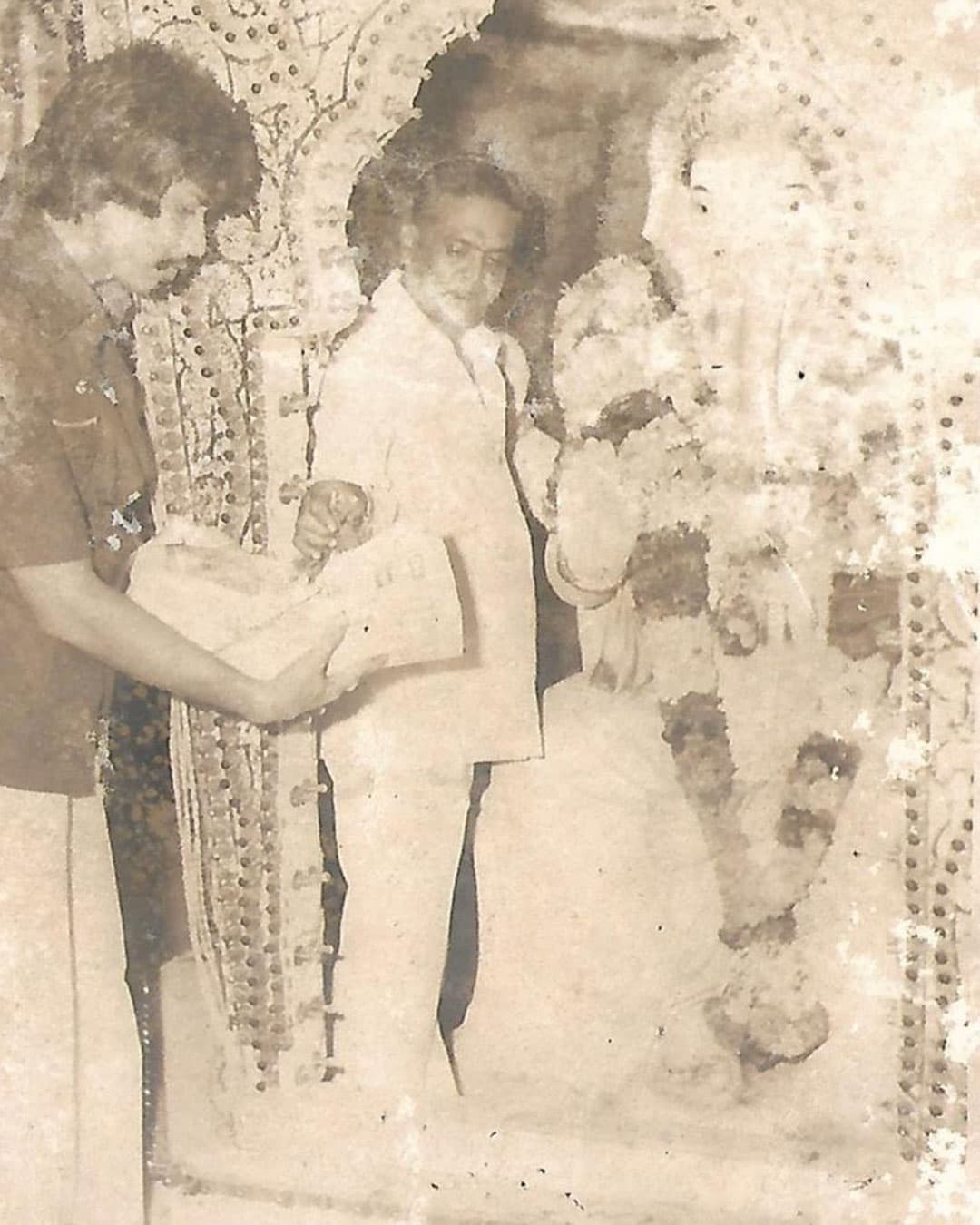
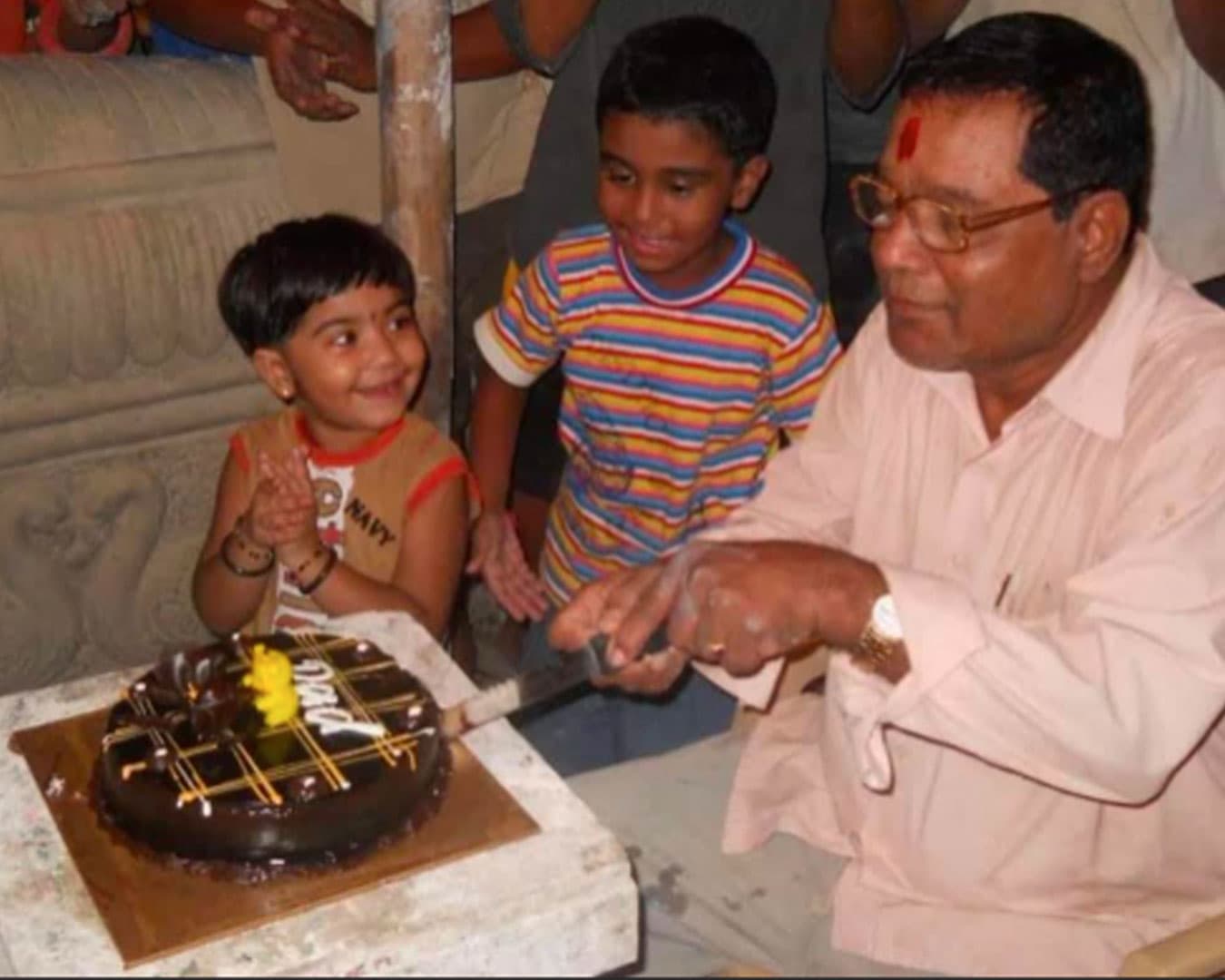
The struggle of young Vishnu
When would life’s real test begin? How was that fourteen-year-old boy to know?
At barely fourteen the shelter of a father was lost. The care of his mother and five siblings fell on the eldest son’s shoulders. It was an age for school, for dreaming of the future; yet circumstance gave Vishnu a hard ration of duty.
Feeding a family from a village as small as Tulas grew harder by the day. Before things slipped beyond reach, a way had to be found — and with that thought Vishnu left the village and reached Mumbai.
Rama Mama, a relative living at Prabhadevi, gave him shelter. Life there was not easy either; yet the will to live was greater.
While he took whatever work would feed him, the artist in a corner of his mind stayed awake. The Konkani and the stage are bound by an unbroken tie. That same bond showed in Babi’s life. Painting theatre curtains, making up the players, looking after the running of plays, and sculpting alongside… so began a journey of struggle, yet one growing rich with art.
Those small hands that painted colour slowly became able hands that gave form to clay.
A man of the house, shaped by duty
Time moved on. The siblings back in the village were growing, and Vishnu’s life too began, slowly, to find its feet.
When the elder sister came of age, Babi took her marriage upon his own shoulders. He saw her wed as fittingly as circumstance allowed — and from that moment he was no longer only a brother. He became the man of the house.
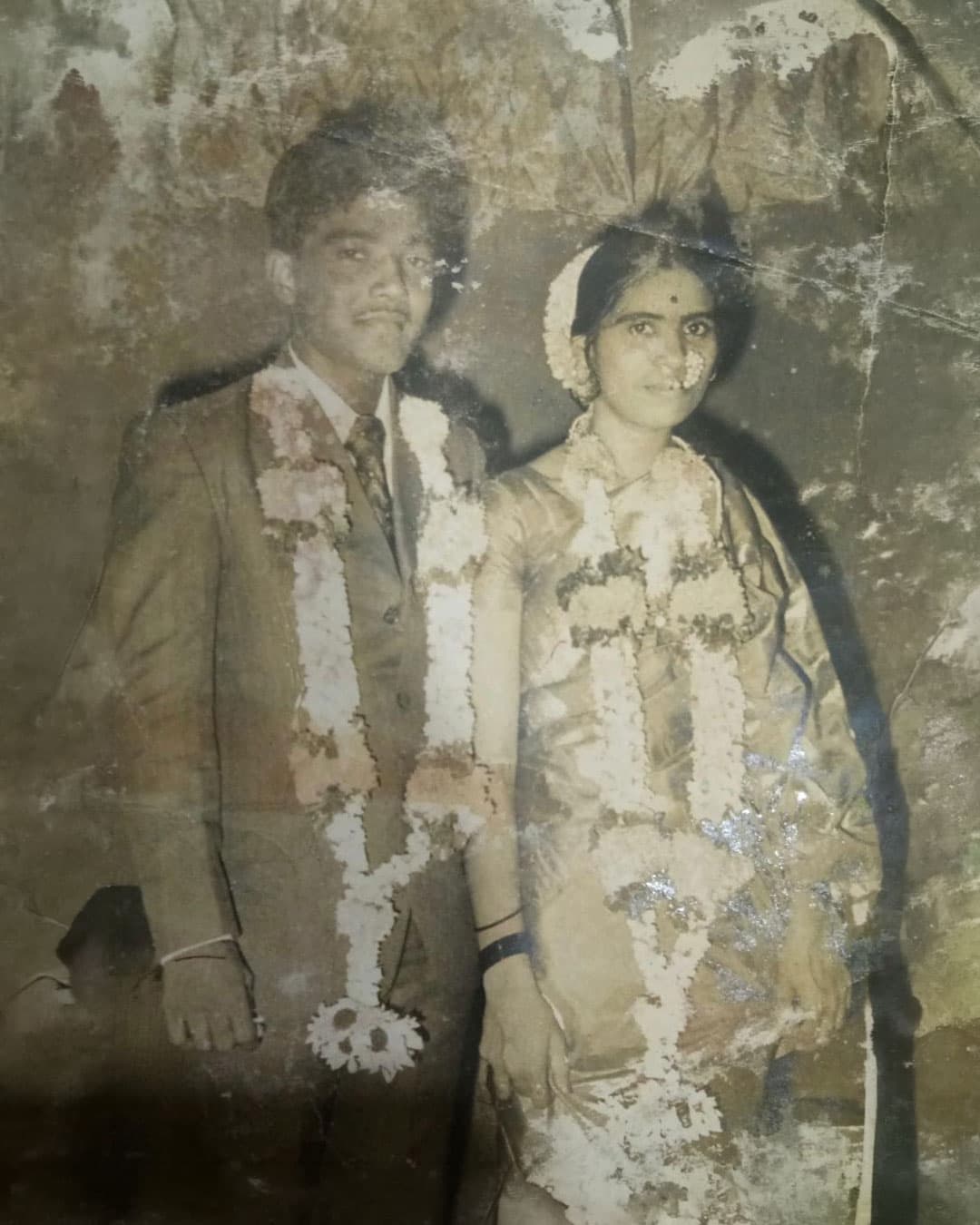
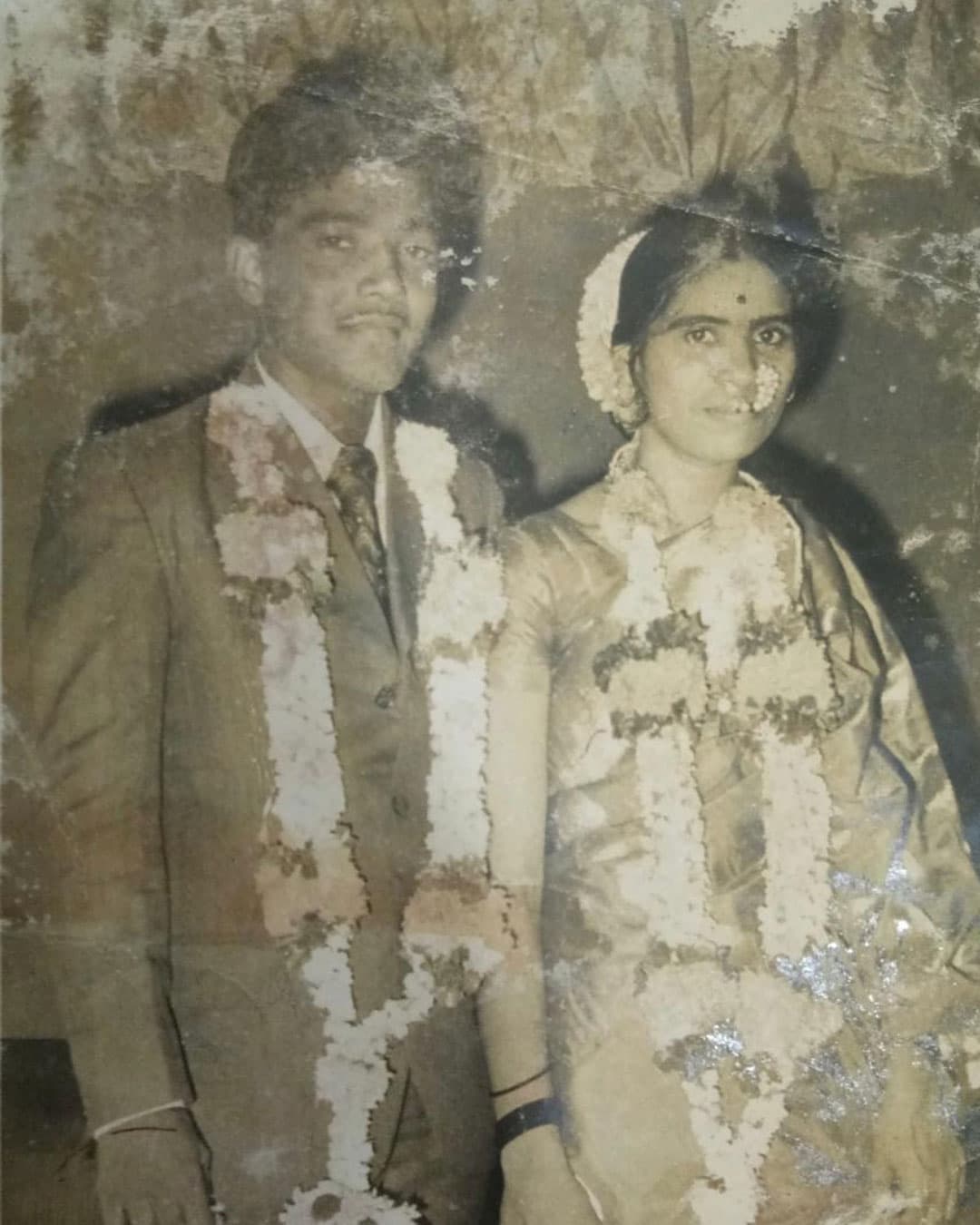
Because the gap in age among the siblings was not large, their mother, thinking of the years ahead, arranged Babi’s marriage with Rajanigandha of Ratnagiri.
That saptapadi became one of the most important turns in Babi’s life.
Rajanigandha was not only the companion of his life; she became the steadfast partner of his struggle, his art and his household.
Tilaknagar, Chembur, and the birth of the name ‘Babi Bandekar’
After some time Babi moved to Tilaknagar, Chembur. At this stage of life he had the company of colleagues such as Rajan Nair, Madhukar Desai, Surve, Bhai Bhosale, Shinde, Khade and Belnekar — and on the other side, the loving, steadfast company of Rajanigandha.
The artist within, however, would not sit still.
At first they worked at Bharmasel, then at Bharat Radiator; yet the heart would not rest in a job. For their bond with clay was no less than a bond of blood.
At last they left the job and gave themselves wholly to the craft of sculpture.
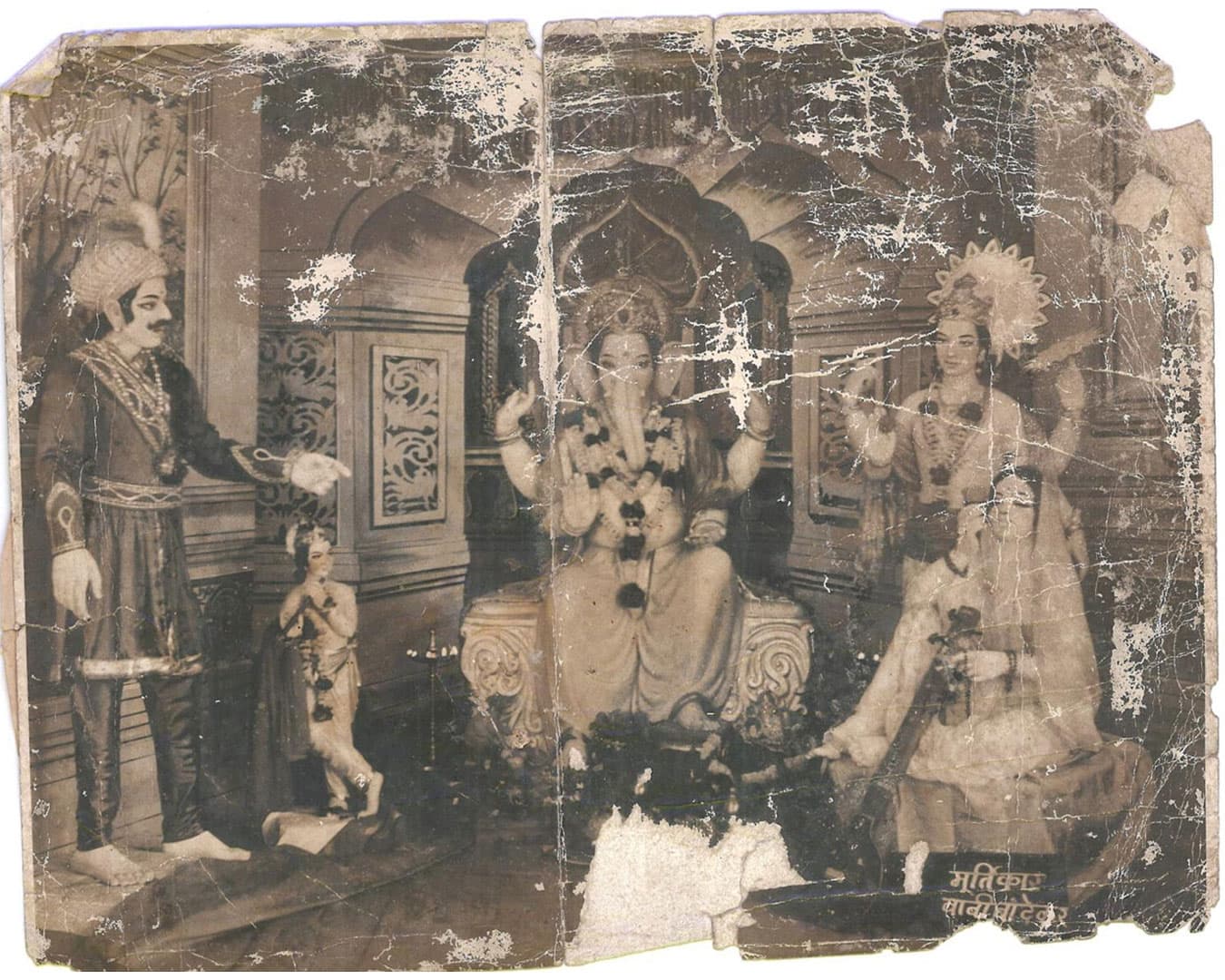
And so began not merely one artist’s path, but the golden journey of the name ‘Sculptor Babi Bandekar’ — a name that would become part of the faith of thousands of devotees of Ganesha.
Five daughters — Babi’s Panchratna
Babi and Rajanigandha had five daughters —
Pratibha, Vimal, Manisha, Hema and Trupti.
Babi called them, with love and pride, his ‘Panchratna’.
That there was no son never troubled Babi. On the contrary, he insisted that his daughters should have a high education, stand on their own feet, and be self-reliant.
Today all five sisters are highly educated, graduates, and married.
From childhood they saw their parents’ struggle. They grew watching Babi’s love of art and the support Rajanigandha gave the household. So their navel-cord with the sculptor’s craft was no accident — it was the natural widening of values that had flowed from generation to generation.
Even while they finished their studies, their hands too were drawn to the form of Ganesha.
Today these five daughters hold, with strength, the great house of Ganesh Chitra Mandir.
The five elements made visible
Looking at these five sisters who shape the forms of Ganesha and Durga with their own hands, a thought comes —
Babi’s Panchratna have, as it were, given bodily form to the five great elements themselves.
As with earth, water, fire, air and sky, their art too holds variety, flexibility, strength, creativity and breadth.
Babi did not look at his heirs as ‘daughters’ alone; in them he saw the finest women sculptors of the future.
Women — and five sisters at that, all married, all highly educated — and still the cord with clay as tight as ever!
This journey is not only a family legacy. It is an inspiring ideal of women’s strength, self-reliance, and fidelity to art.
“Outside you may be anything… once you come in, you are of the clay!”
Babi’s workshop had a discipline all its own.
Each of the Panchratna is highly educated, a graduate, able in professional life. Their husbands too are highly educated.
Yet on entering the workshop there was one rule —
“Whatever you are, leave it outside with your sandals. Once you come in, you are only of the clay.”
This was not a notice alone; it was the value of Babi’s art.
Clay must touch the body. The hands must be smeared with clay. The artist must work with their own hands.
That is why each of the Panchratna knows every limb of the sculptor’s craft.
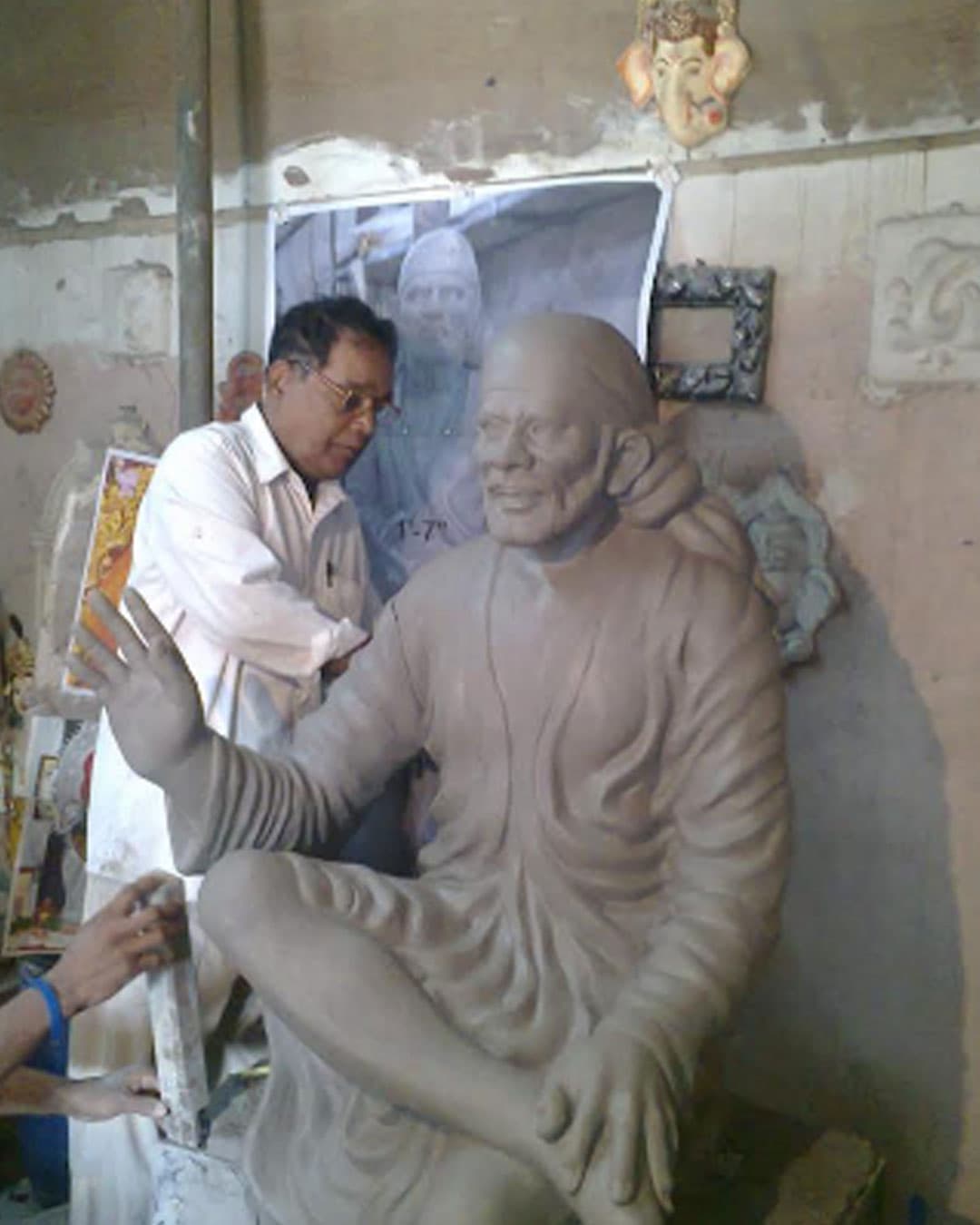
They shape Ganesha murtis from six inches to eighteen feet. Whether a great murti for a public Ganeshotsav or the fine form of a household Ganpati — in every murti one sees a beautiful meeting of faith, beauty and artistry.
From giving clay its form to making the mould; the right use of plaster, rubber or fibre moulds; colouring the murti, shaping the eyes, setting the jewellery, dressing the seat, arranging the materials needed, managing the artisans, and working with devotees of Ganesha — every duty of the workshop the Panchratna have made their own.
For Babi had one teaching —
“Everyone must know how to do every kind of work.”
Babi — stubborn by nature, loving at heart
He was loving; yet his love was felt more in deeds than in words.
He looked after everyone. His hand was always a giving hand. And his fidelity to art was unbroken.
When clay came into his hands it did not remain clay alone; it became faith, it became form, and it gave shape to a devotee’s feeling.
12 November 2015 — the body went, the legacy remained
12 November 2015, Diwali Padwa.
On that auspicious day Babi Bandekar took leave of the world.
By then four daughters were married. The next year Rajanigandha, going to God after Babi, saw their fifth daughter Trupti married.
The pillar of a family had gone; yet the five able people he had shaped still stood.
Babi went… but Babi’s art did not go. Babi went… but his faith did not go. Babi went… but the name ‘Babi Bandekar’ did not go.
For that name is born again and again today through the hands of his Panchratna
Timeline
10 July 1947
Birth
Babi Bandekar — Vishnu Bhagwan Bandekar — is born. From Konkan roots he would later shape clay into serene Ganesha for Mumbai and beyond.
1961
Father’s passing
Bhagwan, himself a sculptor, passes away. Young Babi carries forward that lineage and soon brings the craft to Mumbai.
1969
Founding of Ganesh Chitra Mandir
Ganesh Chitra Mandir is founded in Chembur. From Amar Mahal, Babi’s workshop begins its public journey of devotion and clay.
1969
First idol, first applause
Encouraged by Chembur well-wishers, Babi crafts an eight-foot Ganpati for Maharashtra Aityavardhak Mandal. Only one idol that year — yet published with a photograph.
25 May 1975
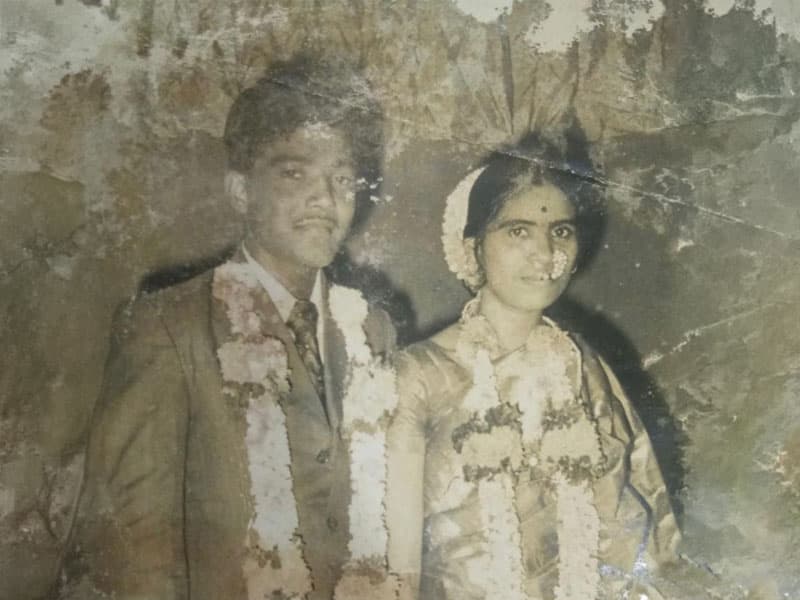
Marriage
Babi Bandekar marries Sou. Rajanigandha. She shares deeply in the workshop’s seasons of craft, care, and celebration.
1970s–80s
Workshop & reach
With artisans beside him, public and household idols travel to Mumbai, Navi Mumbai, Nashik, Pune, Goa and farther. Fiberglass joins clay; long days follow every Navratri.
1992
Centenary honours
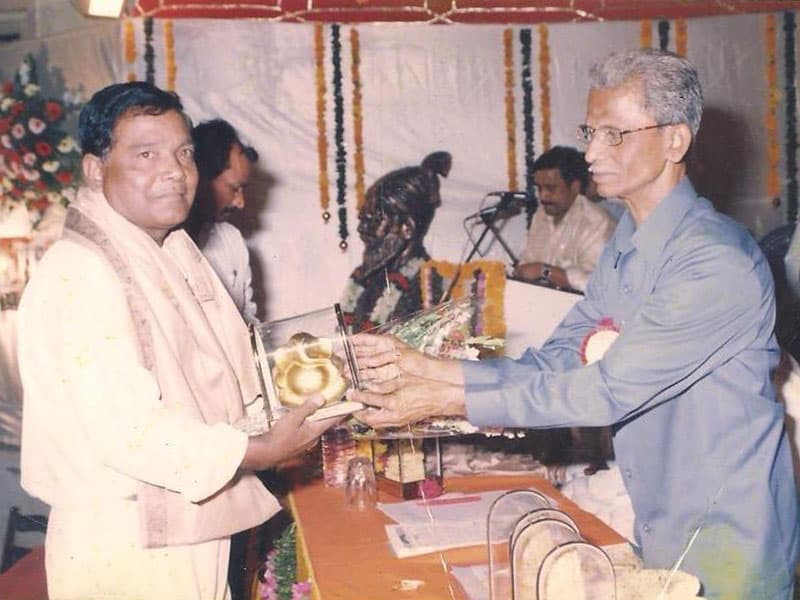
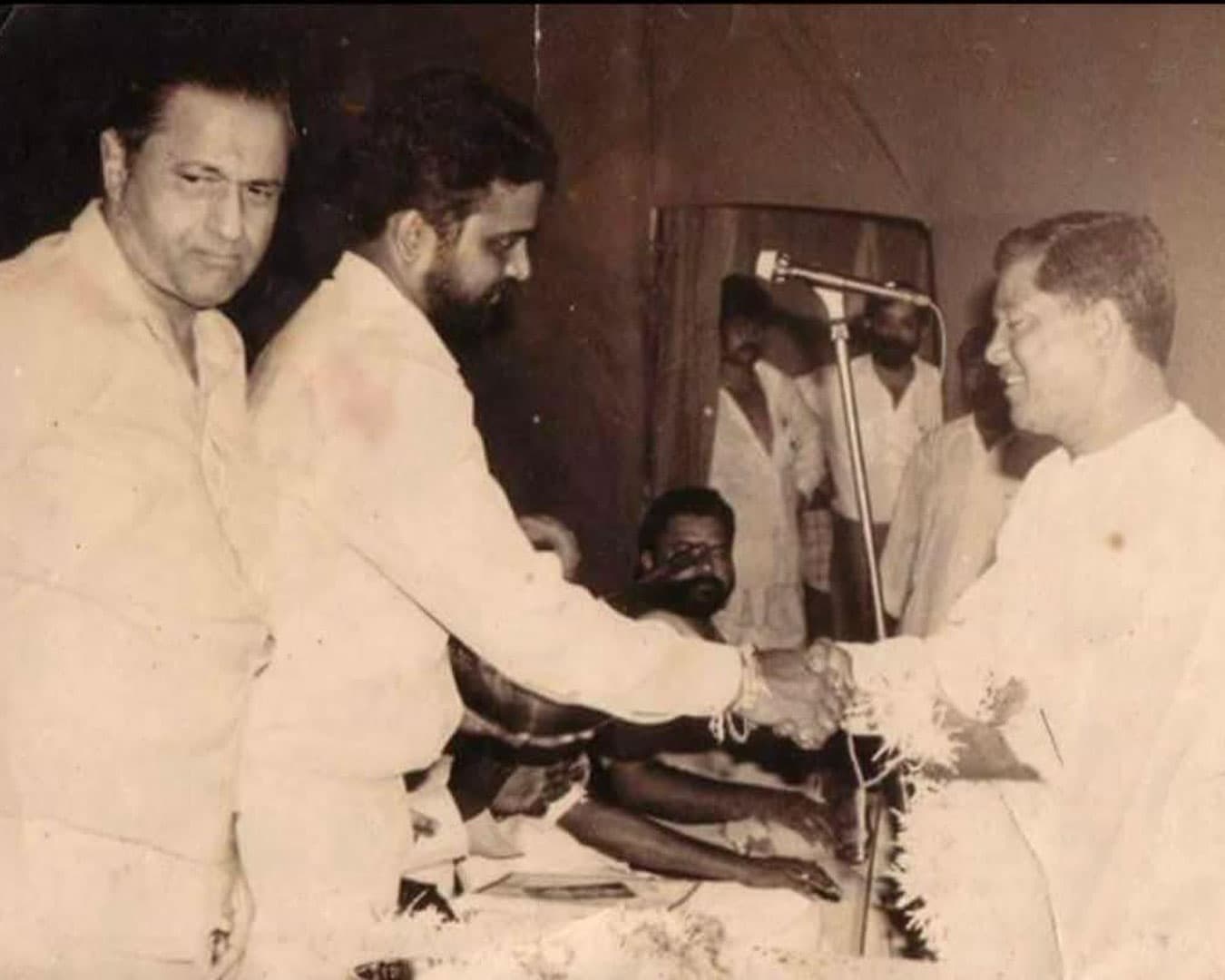
Sahyadri Krida Mandal’s twelve-foot idol wins Orient–Samana first prize in Mumbai. The same season brings Chembur’s Mayor’s Cup for outstanding craft.
1993
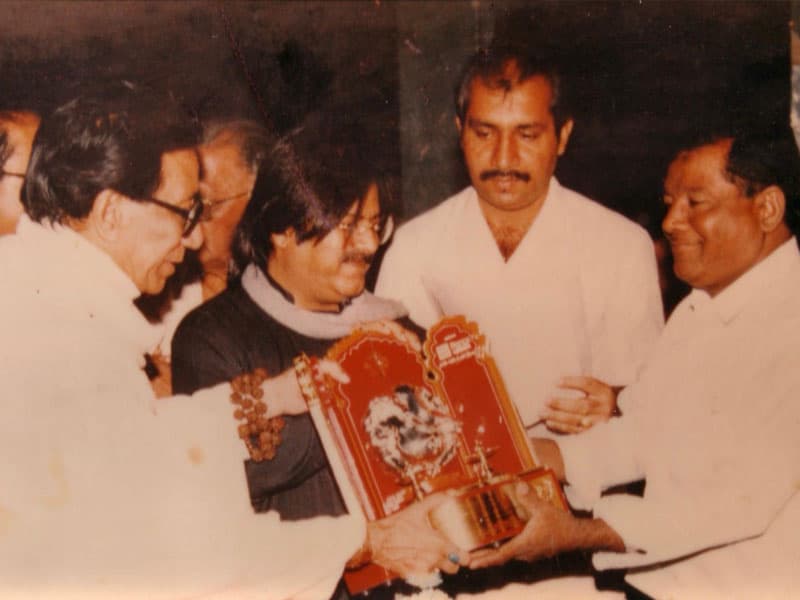
Loksatta best sculptor
Girnar Loksatta Ganesh Darshan names Babi Bandekar best sculptor (Vashi–Panvel) for Prerna Seva Mandal, Sector 6 — a twelve-foot sitting idol among many commissions.
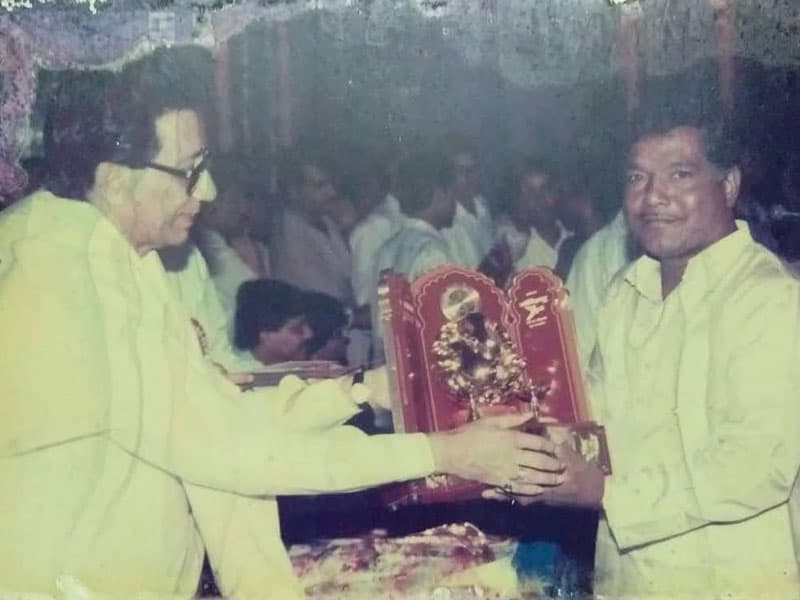
Fire years
Workshop fire
Sri Ganesh Chitra Mandir at Chembur is devastated by fire — moulds, finished idols, wood, paint and plaster lost. On the eve of the season, the city is asked to help the workshop rise again.
Today
The Panchratnas continue
After Babi’s passing in 2015, his five daughters sustain Ganesh Chitra Mandir — education, craft, and devotion in one living workshop tradition.
Memories of Babi Bandekar
Dada — An Ascetic of Art
A story from my heart — of clay, devotion, humanity, and legacy
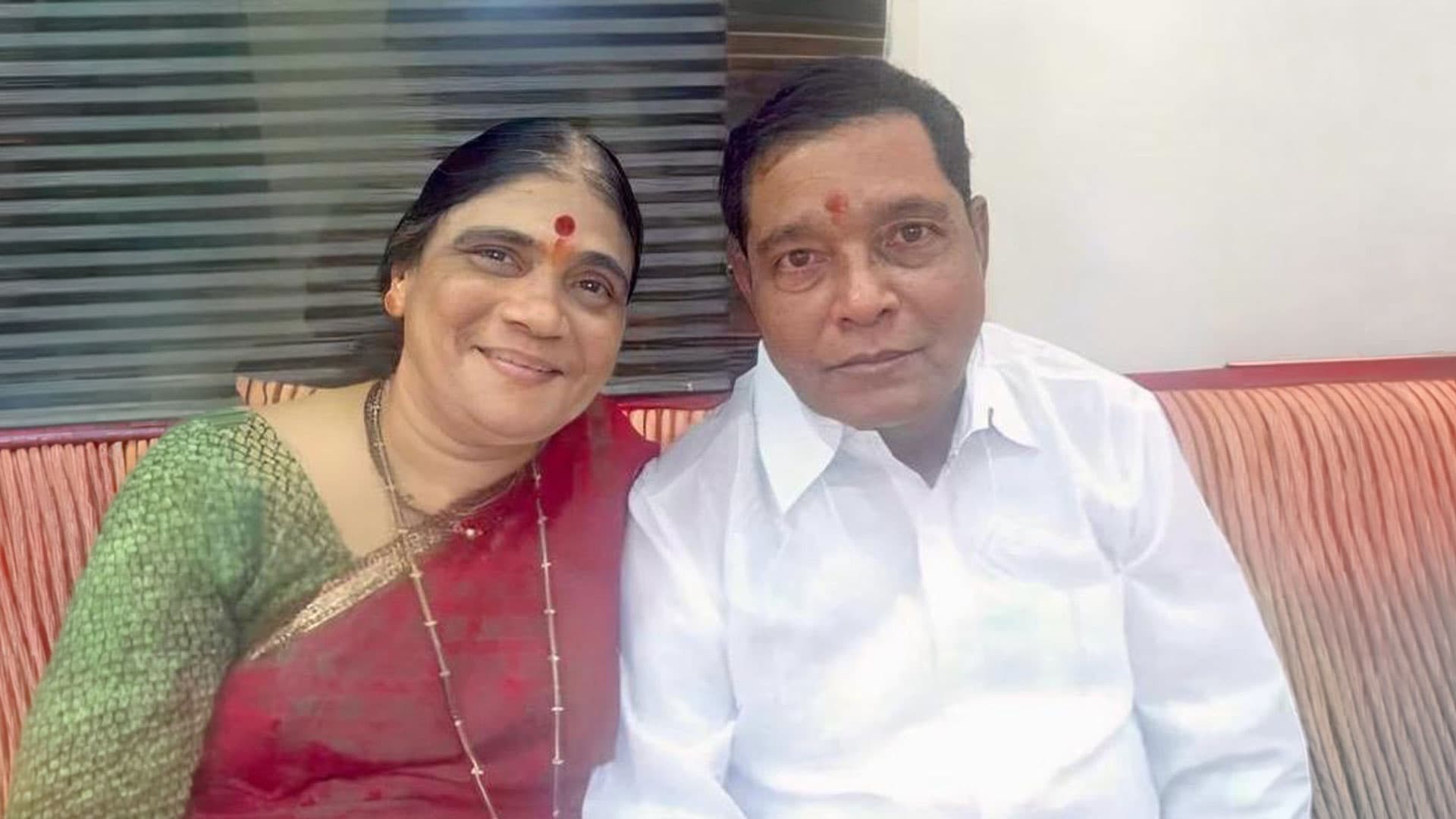
“While shaping clay, they shaped a life; while guarding art, they guarded the bond of humanity.”
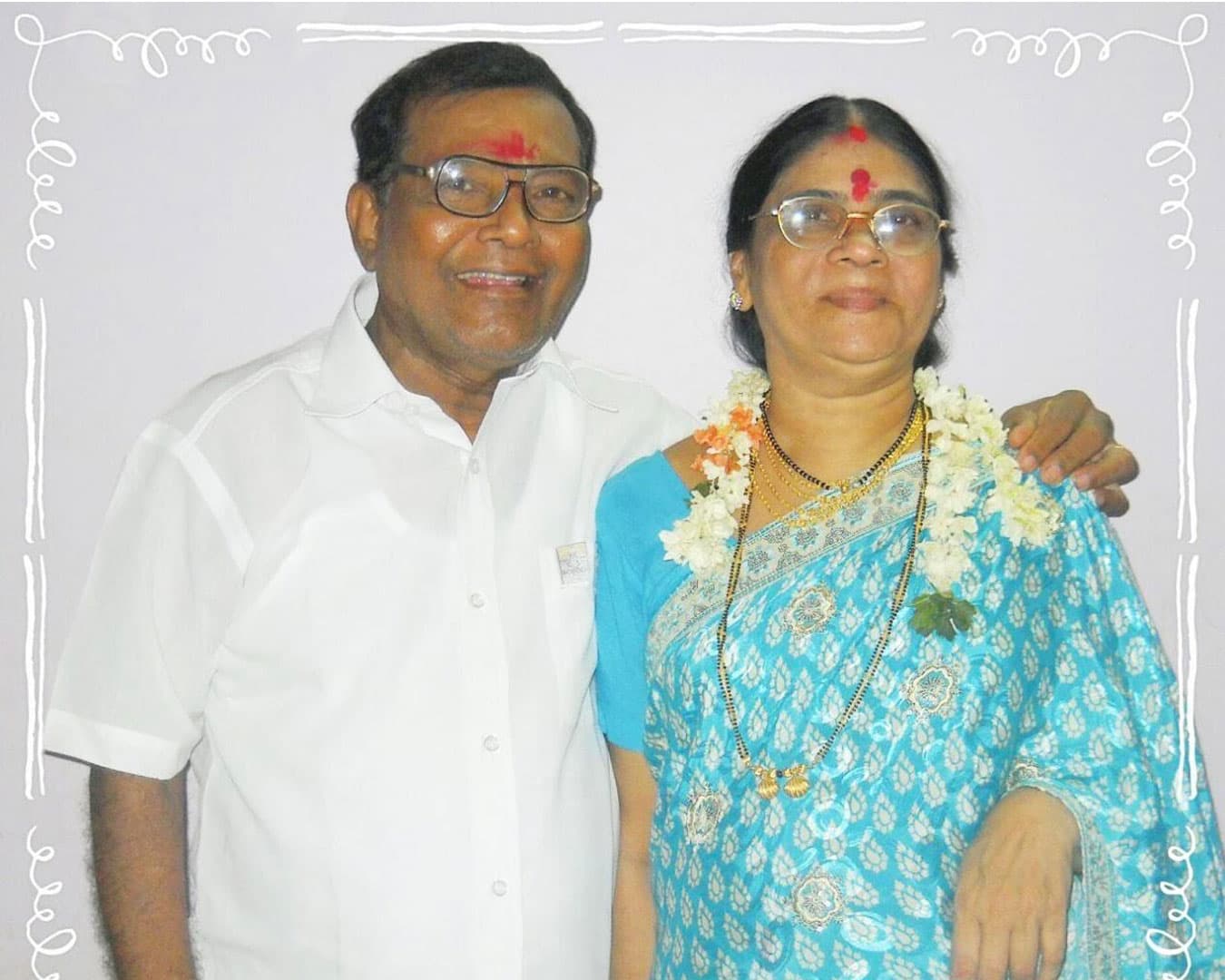
Some people enter our lives and, without our noticing, become a part of our hearts. Time moves on, people go far away, yet their memory stays just as alive within us. For me, Babi Bandekar was ‘Dada’, and his wife Rajanigandha was ‘Aai’. Today both are no longer with us — a thought that softens the heart; yet when their memories are kindled, along with sorrow comes a rare fulfilment and pride.
“Those whose leaving empties a home are not people alone; they become a corner of memory — a part of the heart.”
To me, Dada was never only a celebrated sculptor. He was a loving, simple, warm-hearted person, honest with his art. When clay came into his hands, it did not remain mere clay. As he shaped it, his imagination, faith, experience and heart mixed into it. Crafting a Ganesh murti was not merely a profession for him; it was his sadhana, his worship.
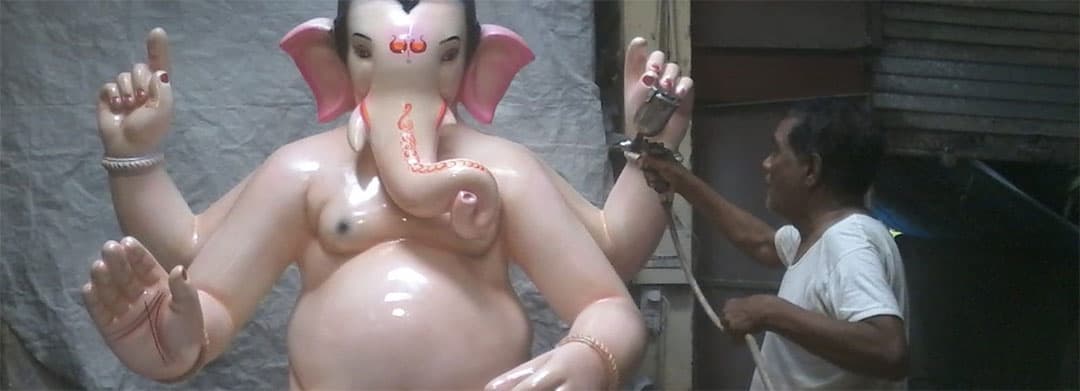
In his art I always sensed something special — the greatness of the craft, but never the pride of the artist. His art received prizes, honours, and recognition of his genius; yet success never shifted the ground beneath Dada’s feet. Awards made his name larger, but the simplicity of his heart remained unchanged. However high he rose, staying rooted — that was the true mark of his character.
Dada’s true stature was not in his awards; it was in his simplicity.
I have always felt that an artist’s art is seen by all; but the people and the sacrifice behind that art are seen by very few. In Dada’s life, the one who lived that role was Aai — Rajanigandha.
“A shade never speaks, yet it never lets the heat of the sun be felt.”
Aai was just such a quiet shade in Dada’s life. Dada lost himself in art, kept conversing with clay, kept shaping murtis; and Aai, too, staying in dialogue with clay in her own way, held the household, home, children and countless duties — and gave that art-journey its foundation. Her contribution may never have been written into any award citation, yet behind every success of Dada was the share of her companionship.
That is why Dada’s story never feels to me like the story of a solitary artist. It is the story of Dada and Aai’s life together. One shaped clay; the other shaped a household. One gave form to murtis; the other gave that art a place to live.
And the five flowers that blossomed from this beautiful companionship are their five daughters — their Panchratna.
Pratibha, Vimal, Manisha, Hema and Trupti
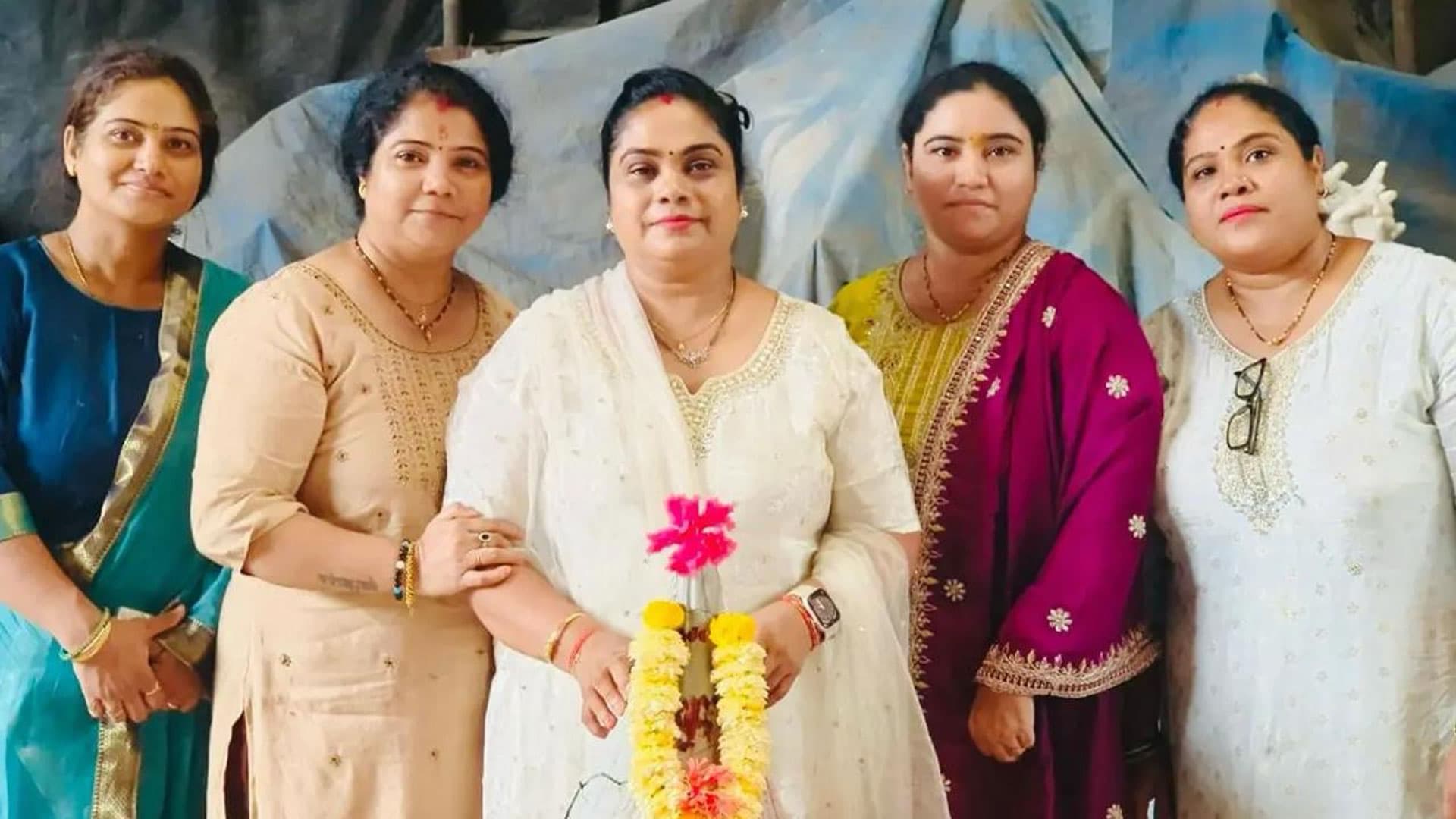
All five daughters are highly educated. Each has chosen her own path in life and in her household. After marriage they carry the responsibilities of their own homes, families and children with strength. Yet amid all these duties they have never let the sculpting legacy given by their father fall behind.
This touches my heart in a special way.
Because receiving a legacy is one thing; keeping it alive is another. Dada did not give them art alone; he taught them how to stay bound to art, how to work hard, and never to forget their roots. The Panchratnas made room for those values in their lives, and today they carry their father’s artistic legacy forward with strength.
“Even if the lamp goes out, the flame is not lost; if the wick of values stays alive, tradition does not end.”
Dada’s hands have stopped today. Aai’s shade of affection can no longer be felt in person. Yet through the hands of their Panchratnas, Dada’s art continues. In their work one senses the touch of Dada’s hands, the warmth of Aai’s values, and the fragrance of an entire family’s tradition.
In my view, this is Dada’s greatest earning.
Prizes came to his art; but the Panchratnas are the greatest prize that came to his values.
Looking back today, Dada’s whole journey feels to me like a beautiful circle. A journey that began with simple clay reached the murtis; from the murtis it reached honours; and beyond honours, it now reaches the next generation in the form of their daughters.
Dada is gone, but Dada’s art is not gone. Aai is gone, but Aai’s love is not lost. The people they shaped and the values they gave are still alive today.
That is why when Dada’s memory comes, it is not only sorrow that fills the heart. Instead a feeling of pride wells up — that I could call such a man ‘Dada’, and experience his wife as ‘Aai’: that is my fortune.
“People go; memories remain; art may pause, but values keep walking. And bonds joined by love — stay alive beyond time.”
Today for Dada there is only one word in my heart — an ascetic of art. And for Aai — the quiet, loving shade of his tapasya. And for the Panchratnas — the next radiant generation of that tapasya.
Dada gave form to clay; Aai gave that art a home; and the Panchratnas gave that art its onward journey. What inheritance could be more beautiful than this?
Dada, your hands no longer touch the clay; yet the art shaped by your hands still speaks today. Aai, your shade of affection is no longer seen; yet the warmth of your values is still felt. And your Panchratnas carry your art forward — this is the most beautiful tribute that life has given to both of you.
“The hands that shaped clay have stopped, yet the art of those hands has not stopped; the shade has gone far away, yet its love has not lessened; and through the hands of the Panchratnas that flame still burns today…”
Dada and Aai — my heartfelt pranam.
— Vinayak
From memories of Dada and Aai, kept safe in the heart… 🌺
Moments